Ryedale Woodturners
This website is being updated from August 2022. This is an archive page.
2021 Annual Club Competition
Thursday 2 December 2021
The annual December social event this year repeated the buffet we enjoyed in 2019, organised and picked up by Phil Coe and his wife, from Morrison's in Scarborough and Malton (they had to go to both to get what was required!). It seemed to be well received by the members and their guests - a very encouraging attendance to end the year (32). We tried to make it a little more wood focussed than some previous events. Hopefully we managed to provide a good mix of activities, and of course that valuable opportunity to talk to each other!

Thanks to Steve Cooper for the picture quizzes on prime ministers, cheeses, bridges, monuments, TV personalities, cathedrals, and road signs. Thanks also to Lance for the crossword (a copy is available here, and answers) with woodworking themed clues. Steve Fearnley's egg challenge with 40 different timbers proved a bit too challenging for most, but well done to the winners, Jack and his Mum Helen, for getting 17 right. If you are interested the timbers are listed on Steve's oldfern website at oldfern.co.uk
Show and Tell
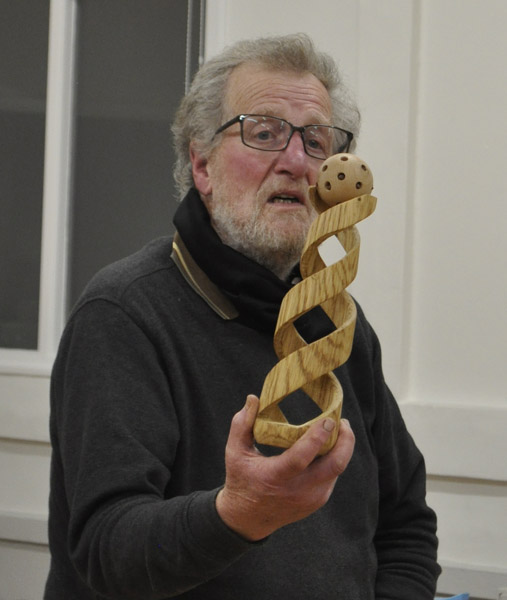
John Whiteley shared a hollow spiral intended to hold a crystal, but which had failed to support the weight and ended up cracking, requiring a re-design. He also showed us a segmented bowl made using purple heart and iroko(?). Unfortunately he had finished it with oil, which rendered the distinction between the two woods virtually non-existent. Also (of course) an off-centre turning you may have seen before in the Corona Gallery.
 John Lund talked us through his version of the off-centre candlestick that John Whiteley had demonstrated last meeting, based on six different centres. John has a very large Wadkin lathe (7' 6" bed) with a massive chuck that has individually adjustable jaws. He is now onto his 4th off centre candlestick, with a little less skin on his knuckles than he used to have.

Derek Quinn showed us a large, heavy, cast iron tailstock that forms part of a hand lathe. It used to be used in a coopers shop at the cement works in Sandsend. Probably last used in 1941. Derek is working to restore it to its former glory. It has its advantages - sturdy, no electricity required, and variable speed. When finished, if he can organise transportation he may bring it to the club to show us.

Steve Fearnley showed us a roughed out hollow form turned from part-seasoned sweet chestnut. It has been left about an inch thick to dry, before final turning to shape and finishing. Not a piece of the Scampston chestnut, but bought from Snainton Woodworking Supplies. About 20% moisture content to start with, down to around 15% now. (The lumps from Colin's van are more like 30 - 35% wet).Steve has been microwaving it for a couple of minutes each day, and weighing it to see if it is still losing weight.
John suggested using silica gel with wet wood, available in pellet form - look for dried flowers providers. Pack these in and around the piece and stick in the oven. The water transfers to the silica.
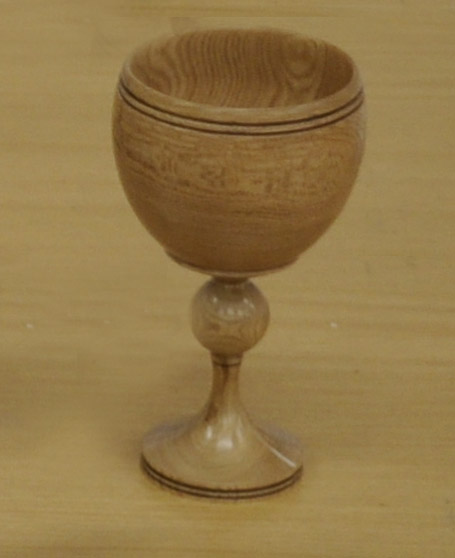
Steve had also turned and finished a goblet in chestnut from Scampston- one of the drier branches that had died whilst still on the tree. He brought half a dozen such logs along for people to take away and try.
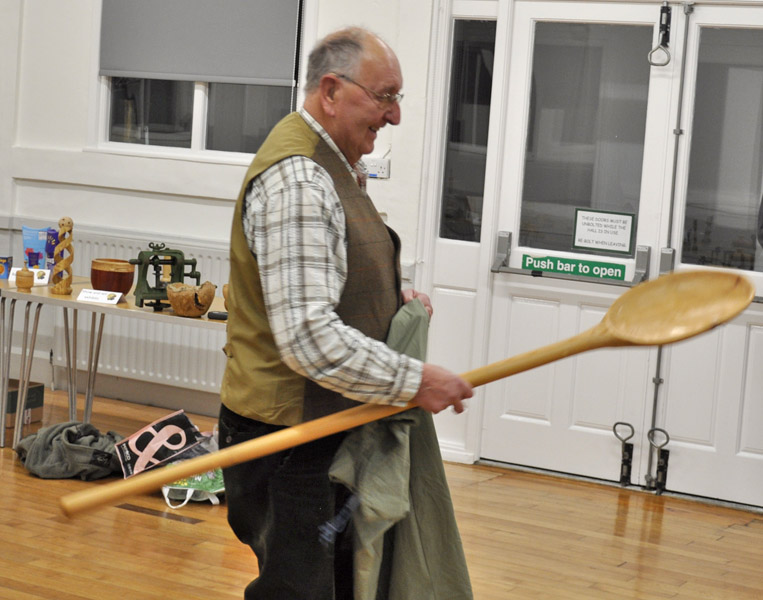
Bob Ingram showed us a box made from waste wood found at the roadside in Newton on Rawcliffe. He had shown us it at a previous gathering, when it had a French fit lid (Tolouse). He had made various attempts to improve it and now felt he had got it right. He had also turned and carved a large spoon, and by large he meant six foot long!

Steve Cooper had brought along a heavy maul, or mallet, made from a lignum vitae bowling ball someone had given him. Those who picked it up will have felt the weight in the lignum vitae, one of the densest woods to be found. Very oily, but quite pleasant to turn. Now listed on CITES II as endangered, so you are not likely to find it away from recycling old green bowls.
Annual Club Competition
The competition saw a good number of entries in the beginners and expert sections, but only one member entered the intermediate - and hence won all three prizes!
The winners were:
 Beginners

1st - Rolling pin, Jack Scott,
2nd Ply Christmas tree,
Andrew Eastwood
3rd Grass pot (or bud vase)
Derek Quinn

Intermediate
1st Fruit and bowl
2nd Coloured dish
3rd segmented candlestick
all by Geoff Walker
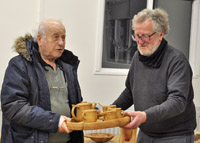 Advanced

1st Spalted beech tea set
Brian Wrigglesworth
2nd Segmented half bowl -
Martyn Weller
3rd Red mallee burr bowl,
John Whiteley
Chairman's challenge.

John Whiteley had handed out blocks of spalted beech and ash a couple of meetings ago (from Frank's store - Frank still has planks available), with the challenge to turn something from them. Eight returns appeared, all different, some involving more than one item.

The winner, chosen by John Whiteley, was Keith Harte's candle holder "stools". John commented on his appreciation of the skill required to turn six identical legs, creating two matching miniature stools. As well as the box of chocolates as a prize, John gave him a banksia nut to turn. Keith was delighted (?)
Free chestnut blanks

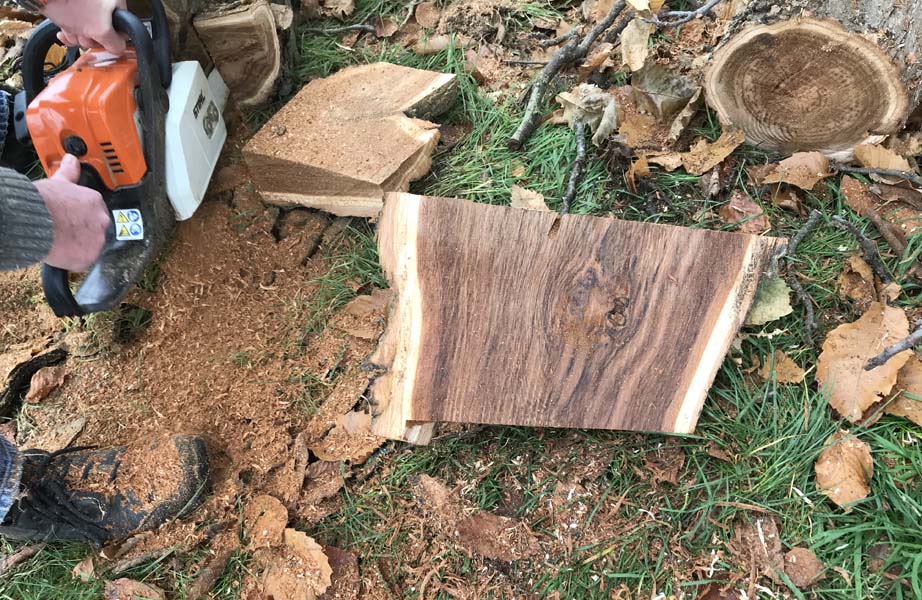
Thanks go to Colin Walker, who brought along his transit van full of the sweet chestnut cut from a fallen branch at Scampston Hall. A number of members helped themselves to some pieces. We will wait and see what comes of this experiment with wet wood. One thought to bear in mind is that if we do get to Scampston for an exhibition and/or sale, they will probably like a few large showpieces and lots of small items that people can buy as an authentic piece of the old chestnut.

Beginners class exhibits

Advanced class exhibits

Chairman's challenge exhibits

Chairman's challenge exhibits

Bob with a found-wood box

Andrew Eastwood took 2nd prize with a ply Christmas tree

Derek Quinn took 3rd prize in the beginners class with his grass pot

Martyn Weller's segmented half bowl took 2nd prize in the advanced section

John Whiteley's red mallee bowl took 3rd prize in the advanced section

Two bowls in the beginners' class

Martyn Weller's segmented half-bowl took 2nd prize in the advanced section.
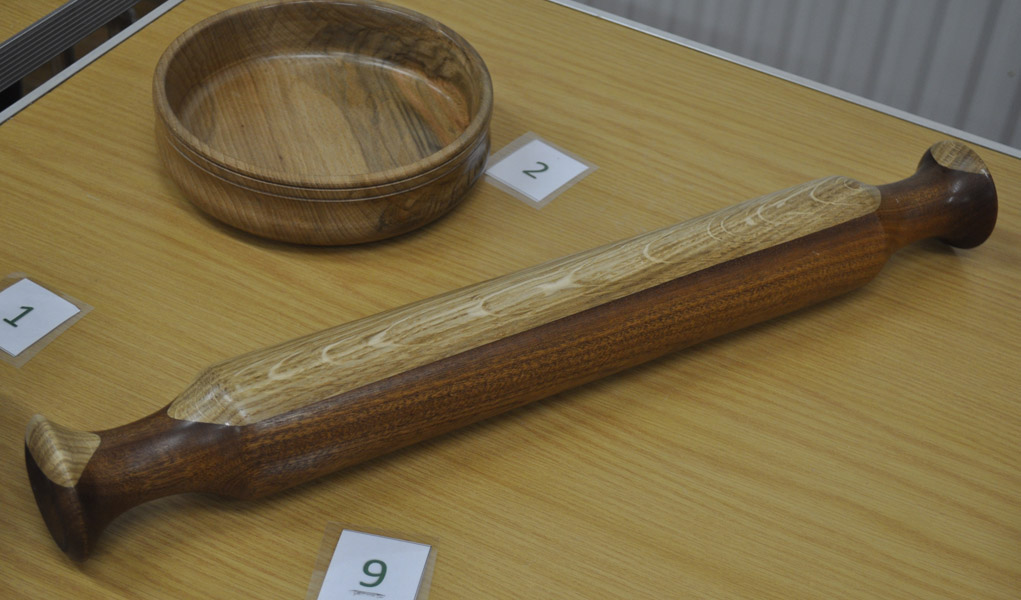
Jack's large rolling pin took 1st prize in the Beginner's section
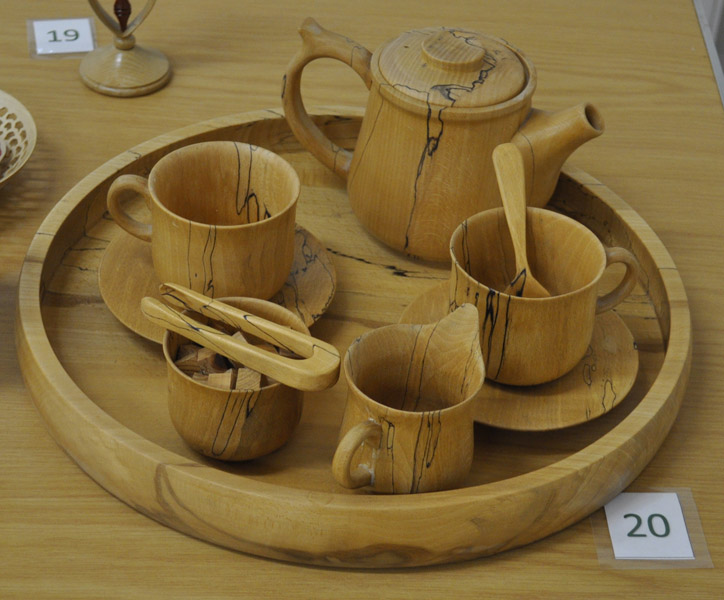
Brian's winning spalted beech tea set - perfect down to the sugar cubes!
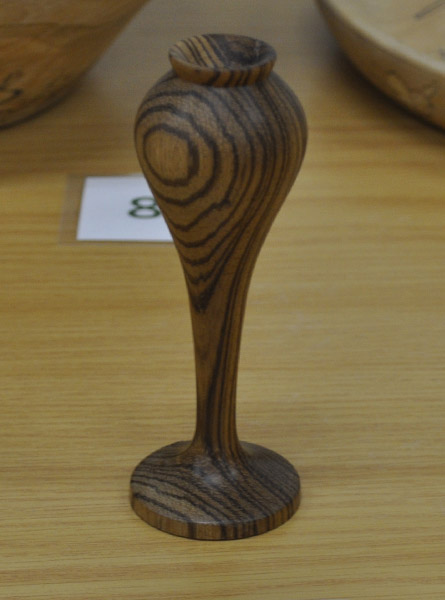
Derek's 3rd prize bud vase

Keith's candle holders were chosen as the winner of the Chaiman's challenge

A good turnout, including family members and partners

Geoff's offcut segments candlestick,
Intermediate 3rd prize

One of John Whiteley's signature pieces, a red malee burr bowl

Show and tell items brought along by members.

Geoff's fruit bowl, intermediate 1st prize

Geoff's coloured and textured dish, intermediate 2nd prize
 Andrew's plywood Christmas tree took 2nd prize in the beginners section