×
![]()
Ryedale Woodturners
Steve Fearnley
Thursday 6 October 2022
Snainton Village Hall
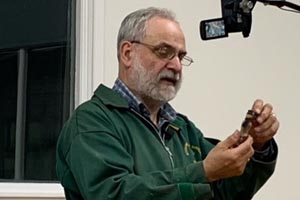
Club secretary and treasurer Steve Fearnley gave a demonstration on turning offcuts and logs into saleable items, using pieces he has sold successfully in the past.
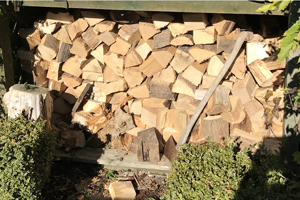
Steve started by talking about a load of logs purchased from Snainton Woodworking for burning on his stove. The price having risen £20 in 2 years to £70 for a dumpy bag, he thought he could cover the cost by turning a few of the logs that were spalted into small items for sale. There were about a dozen such logs in the pile. He turned an apple (£10), a mouse (£8), a Christmas pudding (£5), and a few light pulls (£2 each) from one log, with more blanks cut to make another mouse, another apple, and a dozen light pulls. Over half the bag paid for from just one log!

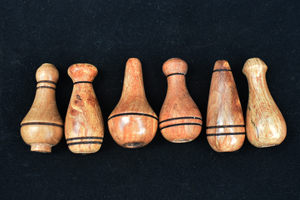
Steve had recently bought a lightpull drive kit (Planet Rotur), interested in its capabilities. He turned a lightpull from a small scrap of spalted beech, starting by drilling a 3mm hole through the block, with a 6mm hole to follow, which takes the knot in the lightpull cord. This is then pushed on to the drive, held by a centre in the tailstock, and turned to shape.
Steve prefers working with natural wood, and rarely uses texturing or colouring. Shape and form are what interests him - and even with a simple five minute turning like a lightpull there is infinite scope for slight variations and refinements. One regular feature in much of his small ornamental work is black lines, burnt in with a piece of formica.
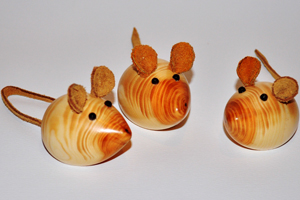
Steve then had a look at turning a mouse. Based on designs in Turning Vintage Toys by Chris Reid (GMC), a mouse is turned from a yew branch about 3 inches long and an inch and a half wide. Dimensions are not vital, but proportions are. The final mouse should be about 1.5 x 2", or 3:4 ratio. The rear should be a hemisphere. 3mm holes drilled for eyes and tail, and 4mm holes for ears. Ears are cut from leather using a template, and eyes turned from ebony or blackwood.
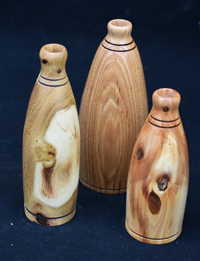
With time pressing a little, Steve talked about some other items he had put out on the display table, rather than actually making them on the night. Grass pots can be any size, and smaller seems to work well for selling. Once again there is endless opportunity to experiment with shape and form. They often look well in trios, three different heights, with a similar design. Making a batch of a dozen would allow sorting into different groups. Adding some dried grass - timothy, foxtail, nodding grass all work well - or dried poppies helps to offset the turning and demonstrate the intention of the piece.
Glass tubes could be inserted for water and live flower buds, or perhaps for oil and diffusers.
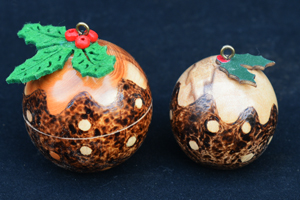
After the break, Steve talked about making Christmas puddings. A wavy line is drawn on a ball turned from a creamy coloured wood such as beech, sycamore or yew, and then the bottom area burnt with a pyrography pen. Steve used a Razertip machine with a wide pen nib. The ball is then topped with a holly leaf and a screw eye inserted. Holly decorations bought from Hobbycraft - 30 for £1. Larger versions are available, which Steve used on a slightly larger pudding, which he had hollowed out as a box.
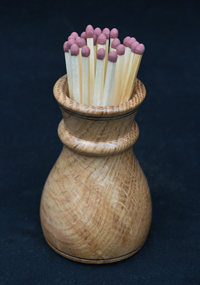
Logs and small offcuts can be turned into pots of various sizes and shapes. These could hold pencils and pens, or as here, some long matchsticks. Multicoloured match heads are available, but are very expensive. These are safety matches (Bryant and May Long Matches), so they need a strike pad - which I stuck underneath the vase. You can buy self-adhesive strike paper online, though again it is quite expensive - £6 for an 8 x 5" sheet.
To date grass pots have outsold pencil pots, and I haven't tried the matchpot as yet, but part of the fun of sales is seeing what appeals and what needs further development. Sometimes pieces that have been in sales for years suddenly go - the right piece for the right person on the day.
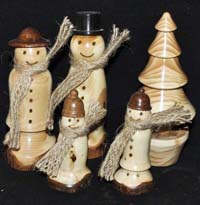
Snowmen have been a regular seller over a number of years now, probably in excess of 400 by Steve and his son. Turned from a yew branch, about 8cm tall, with a darker hat added - walnut, blackwood or ebony if it is available. Eyes, smile and buttons added with pyrography. A jute ribbon scarf gives them a rustic feel, but Christmas ribbons are available as well. Steve showed how he polishes them using a 3-mop buffing system. His is a Beall version, but Chestnut do a similar one and this is likely to be more readily available. Making a family is more likely to sell a group of 4 or 5 pieces, rather than just the one.
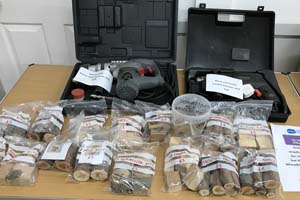
Steve brought along a number of kits for making snowmen, mice, keyrings and lightpulls, allowing people to have a go without buying large quantities of leather and other accessories, which are usually sold in bulk. They were sold in aid of Wheatfields Hospice in Leeds, for which Steve was doing a 10k walk at the weekend. £48 raised from these - many thanks to all who bought any.
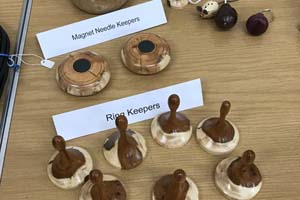
Members responded to Steve's request to bring along small sale items to show. Keith's ring keepers and needle keepers have always been popular - things in yew or laburnum usually are - and Martyn's hedgehog pine cones have sold well this year. Mushrooms, tea-lights, bottle openers, pens, and more all catch the interest at sales as well.
Normandy Wheel
As an added extra, Keith Harte brought along a Normandy Spinning Wheel that he is restoring. A large version of the spinning wheel family, with a hand-cranked wheel over 30 inches in diameter, fourteen spokes with intermediate short spokes.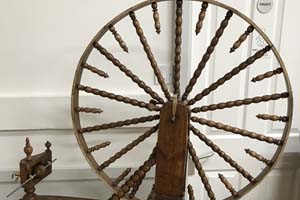
More photos from the evening
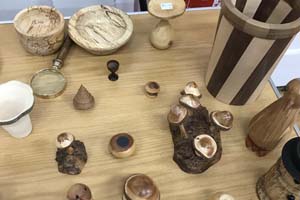
Woodturning sale items
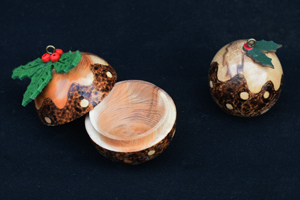
Christmas puds, hollowed out or solid
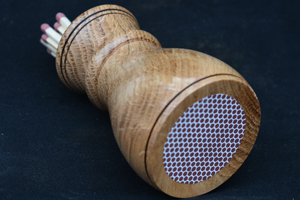
Match pod with strike pad on base
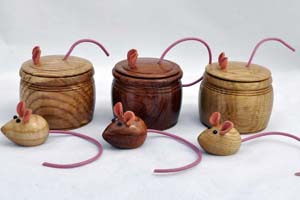
Mice with live-in boxes
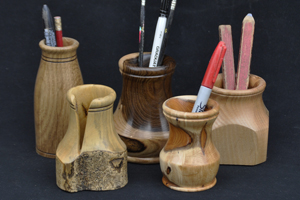
Pencil pots
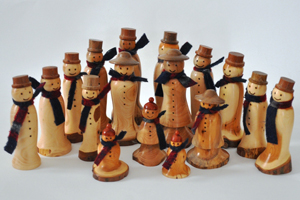
Snowman crowd
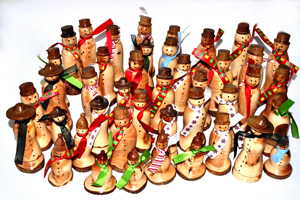
Snowman crowd
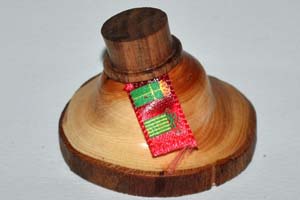
Christmas is over
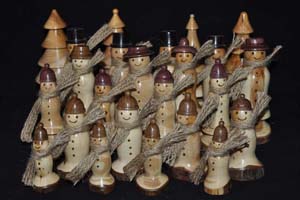
Snow people
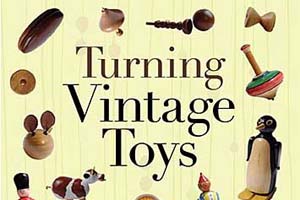
Source book for mouse - Chris Reid
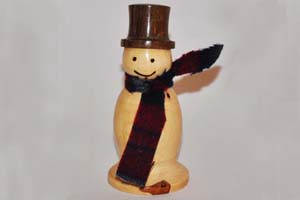
The original snowman
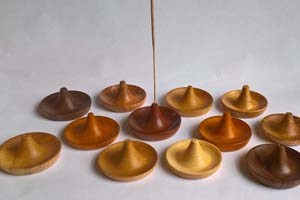
Incense stick holders